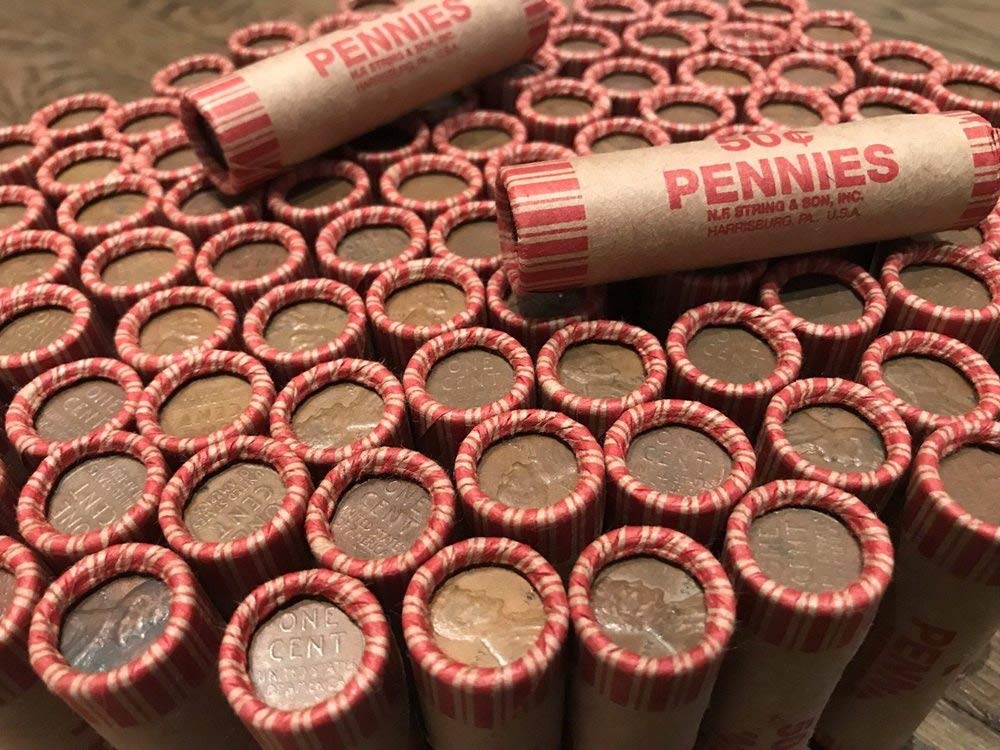
There’s something about a roll of wheat pennies that appeals to both new collectors and seasoned numismatists. The 50 Wheat Pennies (Unsearched Shotgun Roll) from Mixed Years, advertised as circulated Good or Better, offers a chance to dig through history without knowing exactly what you’ll find. It’s a product that sits at the intersection of coin collecting and simple curiosity. But what do you actually get, and is it worth the purchase?
First, let’s talk about what this roll represents. It’s a bundle of 50 Lincoln cents minted between 1909 and 1958, with the classic wheat ears design on the reverse. The term ‘unsearched shotgun roll’ means the coins are packed randomly, without any prior sorting for key dates or high grades. This is important because it sets expectations: you’re paying for the experience of discovery, not for guaranteed rarities. In practice, most rolls will contain common dates in well-worn condition, with a few better dates sprinkled in if you’re lucky.
When you open the roll, you’ll find coins that have clearly been in circulation for decades. The ‘Good or Better’ grading means the designs are mostly visible but heavily worn, with details like Lincoln’s hair and the wheat stalks often flattened. Some coins may have corrosion, dirt, or other environmental damage. That’s part of the charm for some collectors, but it’s also a limitation. If you’re expecting pristine examples suitable for a high-grade set, this isn’t the product for you.
Key functional features of this product include:
- Unsearched random mix: The coins are not pre-sorted, so you have a chance at finding semi-key dates like the 1914-D, 1931-S, or 1909-S VDB, though the odds are low.
- Circulated condition: Graded Good or Better, meaning the coins are legible but show significant wear from use.
- Mixed years: You’ll get a range of decades, from the 1910s through the 1950s, in no particular order.
- Quantity: 50 coins per roll, which is a standard count for Lincoln cents.
One trade-off to consider is the condition. While the ‘Good or Better’ description is accurate, many coins will be on the lower end of that spectrum. You might find a few that are borderline Poor or Fair, with dates barely readable. This is a common issue with unsearched rolls, as the seller has no incentive to remove the worst examples. Another limitation is the lack of variety in some rolls. I’ve seen rolls where 40 out of 50 coins are from the 1940s and 1950s, with only a handful from earlier decades. That’s not unusual, but it can be disappointing if you’re hoping for more pre-1930s coins.
Comparing this to a bag of mixed-date circulated coins from a generic coin dealer, the wheat penny roll offers a more focused experience. A bag of random cents might include many common-date Lincoln Memorial coins from the 1960s onward, which have little collectible value. The wheat penny roll limits you to the older series, which inherently has more historical interest. However, a bag of sorted ‘better date’ wheat pennies from a reputable dealer will give you higher quality and more valuable coins, but at a much higher price. The shotgun roll is a middle ground: cheaper than a sorted lot, but with lower guarantees.
Who is this product suitable for? It’s a good fit for beginner collectors who want to learn about coin grading and history without spending much. It also works for educators or parents who want to give children a tangible piece of the past to explore. For hobbyists who enjoy the thrill of the hunt, unsearched rolls can be a fun way to spend an evening sorting and cataloging. On the other hand, this product is not suitable for serious collectors seeking high-grade specimens or specific key dates for their sets. The odds of finding a valuable coin are slim, and the condition will not meet the standards for a graded collection. It’s also not ideal for investors, as the resale value of common-date wheat pennies in this condition is minimal.
In real-world usage, the roll serves as a time capsule. You might find a 1918 penny with a clear date and a bit of luster, or a 1943 steel cent (though these are rare and often removed before rolling). The process of checking each coin under a magnifier, looking for errors or better dates, is genuinely enjoyable for many. But it’s important to go in with realistic expectations. Most rolls will contain coins worth maybe 3 to 10 cents each in their current state, and the total value of the roll is unlikely to exceed the purchase price by much. The real value is in the experience and the learning opportunity.
Overall, the 50 Wheat Pennies Unsearched Shotgun Roll delivers what it promises: a random assortment of circulated wheat cents. It’s not a treasure hunt with guaranteed payoff, but a modest, honest product for those who appreciate the gritty side of coin collecting. If you’re after a low-stakes way to engage with numismatics, this roll is worth a try. Just don’t expect to retire on the proceeds.