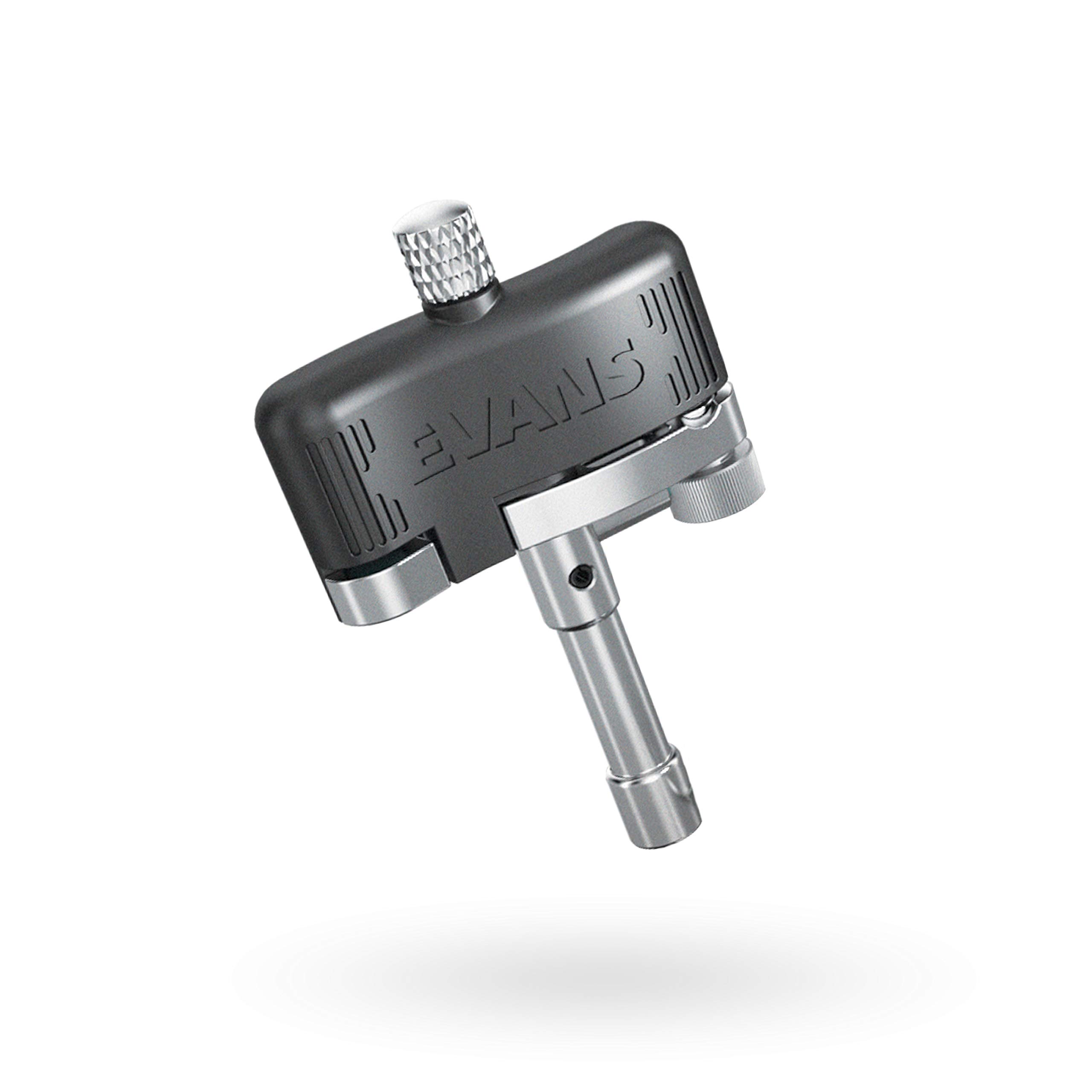
The Evans Torque Key is a tool that attempts to solve one of the more persistent frustrations in drum maintenance: achieving consistent tension across multiple lugs. For drummers who have spent time tuning by ear or by feel, this device offers a different approach—one based on a preset torque value. It’s a drum key with a built-in clutch mechanism that clicks when a specific tension is reached, which can help standardize the process.
In practice, the Torque Key feels solid in the hand. The ergonomic handle is slightly larger than a standard drum key, which gives you more leverage without being cumbersome. The magnetic tip holds the key onto the tension rod, which is a small but appreciated detail—it prevents the key from slipping off when you’re working on a drum that’s not on a stand. The torque setting is adjustable via a small dial on the top, and it clicks audibly and tactilely when the target tension is hit. This feedback is useful, especially in a noisy rehearsal space or during a gig setup where you can’t rely on hearing subtle pitch changes.
One of the key functional features is the repeatability. If you set the torque to a specific level, you can go around the drum and each lug will be tightened to roughly the same tension. This is where the Torque Key shines for initial head seating or for quickly swapping heads before a show. It doesn’t replace fine-tuning by ear, but it gets you into the ballpark faster than guessing. The tension range is fairly broad, covering everything from low jazz tunings to higher rock settings, though it won’t go as tight as some heavy hitters might want for extreme metal or marching applications.
However, there are limitations. The torque setting is not calibrated to a specific pound-foot or inch-ounce measurement—it’s a relative scale from 1 to 10. This means that what feels like a 5 on one key might be different on another unit, and there’s no way to lock the setting once you’ve dialed it in. If you bump the dial accidentally, you might lose your reference point. Also, the clutch mechanism can wear over time; after several months of regular use, some users report that the click becomes less distinct, which reduces the precision. It’s not a tool that will last forever without maintenance.
Compared to a standard drum key, the Torque Key is a clear upgrade for consistency, but it’s not a replacement for a digital torque wrench or a tension watch. Those alternatives offer precise numerical readouts and are better for studio work where exact repeatability across kits is critical. The Evans Torque Key is more of a middle ground—more accurate than a basic key, but less precise than a calibrated tool. For the price, it’s a reasonable compromise for gigging drummers who need speed and consistency without carrying extra gear.
- Who it’s for: Drummers who frequently change heads, play live shows, or want to reduce the guesswork in tuning. It’s also good for beginners who are still developing their ear and need a consistent starting point.
- Who it’s not for: Studio engineers or session players who require exact, repeatable tension measurements across multiple kits. Also, drummers who prefer to tune entirely by ear may find the tactile feedback unnecessary or even limiting.
The build quality is decent, but it’s not indestructible. The plastic components feel durable enough for regular use, but dropping it on a concrete floor might crack the dial or the housing. The magnetic tip is strong, but it can attract metal shavings or debris if you’re working in a less-than-clean environment. Cleaning it periodically is advisable. One trade-off is that the key is slightly bulkier than a standard key, so it won’t fit in a small stick bag pocket as easily. It’s best stored in a larger hardware case or a dedicated pouch.
In real-world usage, the Torque Key works best as a first-pass tool. You can set it to a moderate tension, tighten all lugs, and then fine-tune by ear or with a tension watch. It saves time, but it doesn’t eliminate the need for your ears or a reference pitch. For drummers who struggle with overtightening or uneven tension, this key can help develop a more consistent technique. It’s not a magic solution, but it’s a practical one that does what it claims without overpromising.