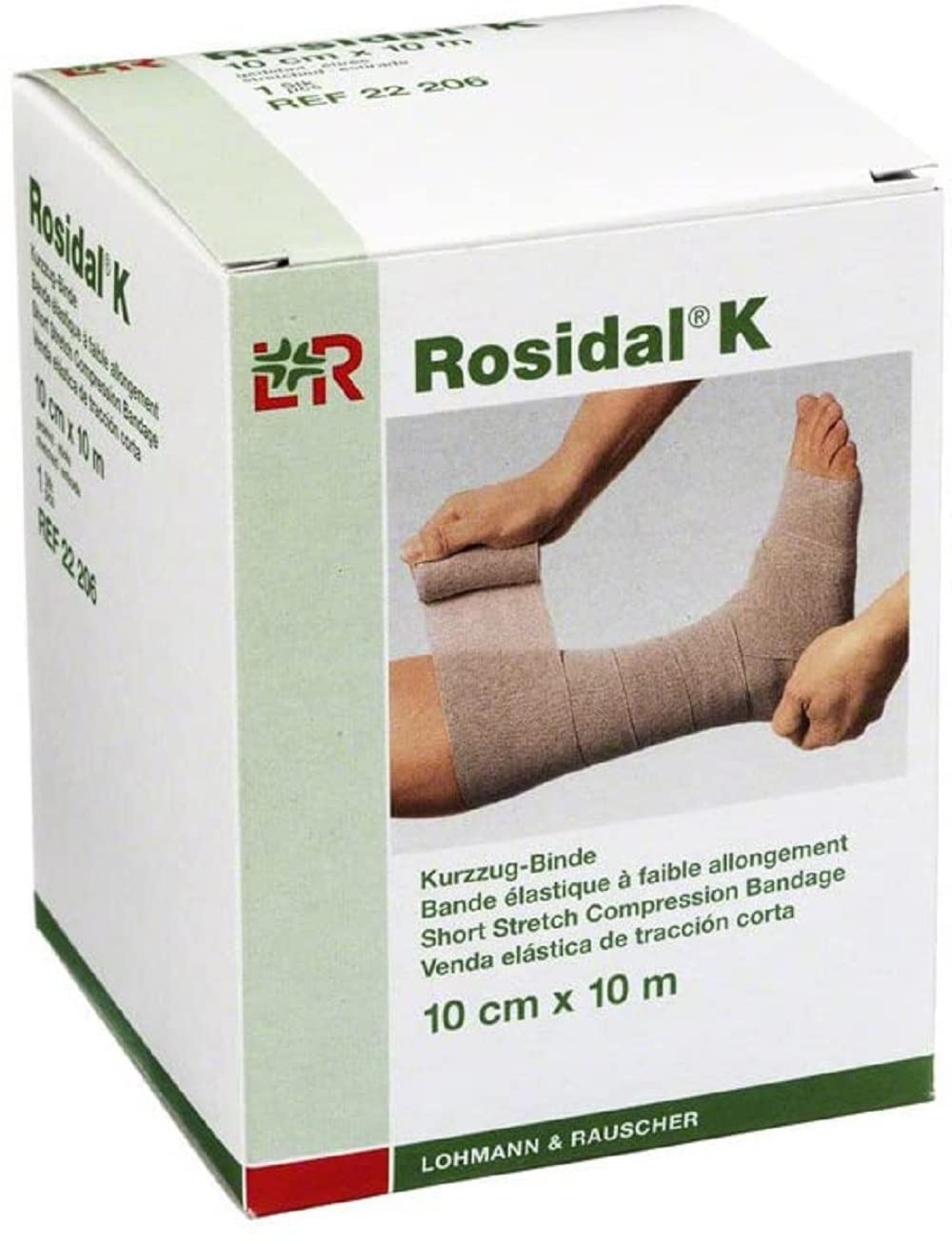
The Lohmann & Rauscher Rosidal K Short Stretch Compression Bandage is a product that finds its primary use in clinical and home care settings for managing conditions like lymphedema, chronic edema, and venous insufficiency. It is a short stretch bandage, meaning it provides high working pressure when the muscle is active but relatively low resting pressure when the limb is at rest. This makes it distinct from long stretch or elastic bandages that maintain constant pressure regardless of movement.
In real-world usage, this bandage is often applied as part of a multi-layer compression therapy system, typically over a padding layer or a liner. It is not something you would use for a simple sprained ankle; it is designed for more persistent conditions where sustained compression is needed to reduce swelling and improve venous return. The bandage measures 3.93 inches by 11 yards (10 cm x 10 m), which is a standard size for wrapping arms or legs, though larger sizes are available for different limb circumferences.
Key functional features include its short stretch fabric, which is made from cotton and polyamide with a latex-free composition. This is important for individuals with latex allergies. The bandage has a firm, non-elastic feel when pulled, and it is designed to be applied at full stretch (100% extension) to achieve the correct therapeutic pressure. The material is breathable, which helps with comfort during prolonged wear, and it is washable, allowing for reuse multiple times if cared for properly.
One notable strength is its ability to provide effective compression that does not tighten further when the limb is at rest, reducing the risk of pressure damage or tourniquet effects during sleep or inactivity. This is a significant advantage over elastic bandages, which can become dangerously tight if left on overnight. However, this also means the bandage requires more skill to apply correctly—it can be tricky to achieve uniform tension, especially for a first-time user. The short stretch nature means it can feel less forgiving than elastic wraps, and improper application may lead to slipping or uneven compression.
A limitation worth noting is that the bandage does not have a self-adhesive or cohesive finish. It relies on tape or clips to secure the end, which can be inconvenient. The edges can also fray over time after washing, reducing the lifespan. While it is reusable, the cotton material can absorb moisture and may need frequent washing if used daily, which could accelerate wear.
Compared to generic elastic bandages (like ACE bandages), the Rosidal K offers more consistent, graduated compression when applied correctly. Elastic bandages are easier to use for temporary support but are not suitable for managing chronic lymphedema or venous ulcers because they provide high resting pressure and can cause complications. In contrast, short stretch bandages like this are the standard in professional lymphedema therapy. However, for someone with mild edema or occasional swelling, a simple elastic bandage or a compression stocking might be more practical and easier to use.
This product is suitable for individuals with diagnosed lymphedema, chronic venous insufficiency, or post-surgical edema who are under the guidance of a healthcare professional. It is also appropriate for patients who can tolerate the firm sensation of short stretch compression and who have the dexterity or assistance to apply it correctly. It is not suitable for people with arterial insufficiency or peripheral artery disease, as the compression could exacerbate these conditions. It is also not ideal for those seeking a quick, easy-to-apply solution for minor swelling or sports injuries.
Overall, the Lohmann & Rauscher Rosidal K is a solid, functional product for its intended use. It does what it is designed to do, but it is not a one-size-fits-all solution. It requires some learning curve and proper instruction to be effective. If you are managing a chronic condition and have professional support, it is a reliable option. For casual or first-time users, it may be more trouble than it is worth. As with any medical compression product, it is best to consult with a specialist before incorporating it into a routine.