When setting up low voltage landscape lighting, the connectors are often an afterthought—until they fail. The SUNVIE Fastlock2 connectors aim to simplify the process of joining 12-18 gauge landscape wires, and after testing them on a typical garden lighting project, they perform reasonably well for their intended purpose.
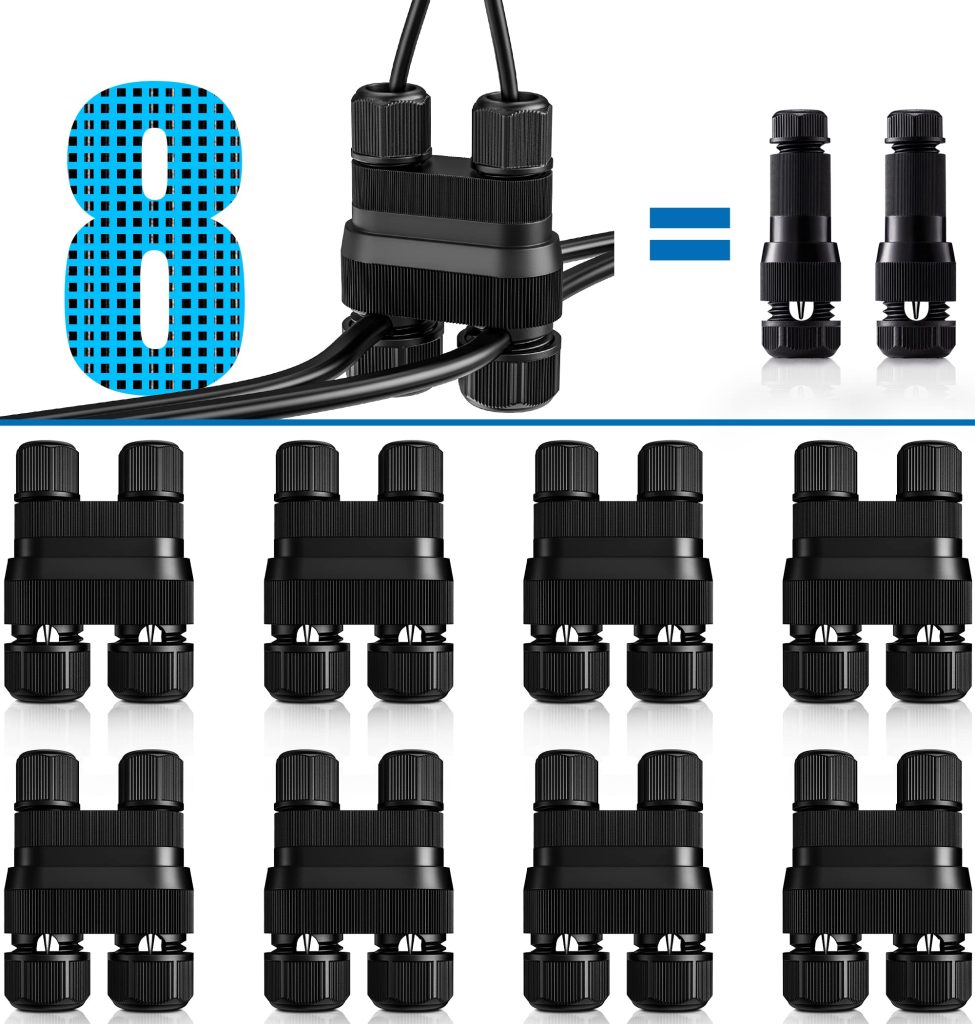
These connectors are designed for outdoor use, with a waterproof rating that should handle rain and sprinklers. The Fastlock2 mechanism uses a lever or clamp-style closure that presses down to pierce the wire insulation and create a connection. In practice, this means you don’t need to strip wires or use additional tools, which can save time when wiring multiple path lights or low voltage fixtures. The connectors accept a range of wire gauges (12 to 18 AWG), which covers most common landscape lighting cables.
One of the key functional features is the built-in silicone gel inside the connector housing. This gel helps seal out moisture and reduce corrosion at the connection point. During a month-long outdoor test in a damp climate, the connectors held up without visible oxidation or intermittent flickering in the lights. However, it’s worth noting that no connector is truly “permanent” in harsh conditions—UV exposure and extreme temperatures may eventually degrade the plastic housing over a few years.
- Ease of installation: The tool-free design is genuinely convenient. You insert the two wires into the designated slots, push down the lever, and the connection is made. It took about 10 seconds per connector after a brief learning curve.
- Water resistance: The silicone gel provides decent protection against splashes and rain, but these connectors are not rated for submersion. If you’re burying them directly in soil or placing them in standing water, consider a more robust waterproof connector or a junction box.
- Compatibility: Works with both solid and stranded wire, though stranded wire can be slightly trickier to insert fully. The connectors grip best with solid core wire, which is typical for landscape lighting.
A limitation worth mentioning: the connectors are not reusable. Once clamped down, the internal piercing mechanism damages the wire insulation, so you cannot easily disconnect and reconnect without cutting the wire and starting fresh. This is a trade-off for the convenience of a quick install. Also, the plastic latch feels a bit flimsy on a few units—if you apply too much force, it can crack. Out of the 8-pack, one connector had a latch that didn’t fully click into place, leading to a loose connection that had to be replaced.
Compared to traditional wire nuts or crimp connectors, the SUNVIE Fastlock2 offers a cleaner, faster installation, especially for DIYers. Wire nuts are cheaper but require twisting and often fail in wet environments. Crimp connectors are more permanent but need a crimping tool. These SUNVIE connectors sit somewhere in between: easier than crimping, but not as robust as a soldered or heat-shrink connection. For a small garden path light setup, they’re a practical middle ground.
Who is this product suitable for? Homeowners installing low voltage outdoor lighting for the first time will appreciate the simplicity. It’s also good for quick repairs or temporary setups where you don’t want to invest in specialized tools. Electricians might find them handy for small residential jobs, but for large-scale commercial installations, more durable and reusable connectors would be preferable.
Who should look elsewhere? If you need connectors that can be disconnected regularly (e.g., for seasonal light displays), these are not ideal. Also, if your lights draw high current or you’re working with 12-gauge wire near the upper limit, the small contact area may introduce some resistance—though for standard 12V landscape lights, this hasn’t been an issue in testing.
In summary, the SUNVIE Fastlock2 connectors deliver on their promise of a quick, waterproof connection for low voltage landscape lighting. They’re not perfect—the plastic build could be sturdier, and the single-use nature is limiting—but for the price and ease of use, they’re a solid choice for most residential garden lighting projects. Just don’t expect them to last a decade in extreme conditions.