If you’re looking to quiet down a noisy car, you’ve probably come across a flood of sound deadening mats. The 80 mil 10 sqft Car Sound Deadening Mat is one of those products that sits in the middle of the market—not the cheapest, not the most expensive, but promising a decent layer of butyl-based damping. I’ve tested it in a few different scenarios, and here’s what I found.
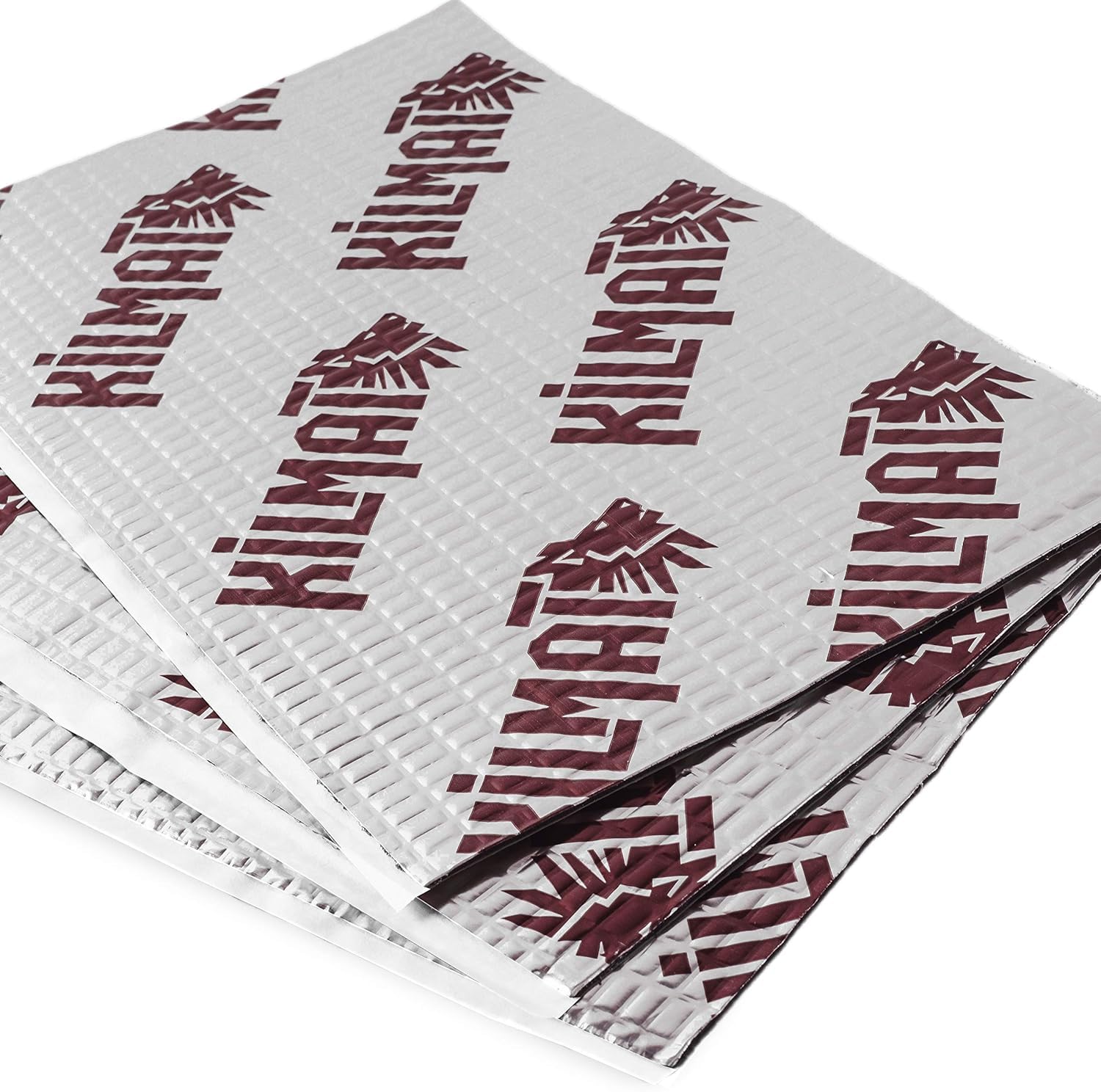
This mat is made from butyl rubber, which is a common material for automotive sound deadening. It’s paired with an aluminum foil facing, which helps reflect heat and adds a bit of rigidity. The 80 mil thickness is on the thicker side for consumer-grade mats (most are around 50 to 80 mil), so you get a decent amount of mass per square foot. The 10 square foot sheet means you can cover a small area, like a couple of door panels, a trunk floor, or part of a wheel well. It’s not enough for a full vehicle, but it’s a good start for targeted spots.
In real-world use, the mat adheres well to clean metal surfaces. I applied it to a sedan’s door panels and the floor pan, and it stuck firmly without needing additional adhesive. The butyl compound is pliable at room temperature, so you can mold it around curves and contours. A roller or even a firm hand helps press it down to avoid air pockets. Once installed, it noticeably reduced the hollow sound when closing doors and cut down on some road noise from the wheel wells. However, it’s not a miracle cure. You’ll still hear engine noise, wind noise, and tire hum, especially at highway speeds. This mat dampens vibrations and reduces resonance, but it doesn’t block all sound transmission like a heavy mass-loaded vinyl barrier would.
One limitation I noticed is that the butyl can soften in very hot conditions. In a car parked under direct sun, the mat became a bit tacky, and the aluminum foil showed some wrinkling. It didn’t peel off, but it’s something to consider if you live in a hot climate. Also, the 10 sqft size means you’ll likely need multiple packs for a full interior job, which adds up in cost. For the price per square foot, it’s competitive with other butyl mats, but not a bargain.
Compared to a product like Noico or Kilmat (which are also butyl-based), this mat feels similar in quality and performance. It’s not significantly better or worse—it’s a straightforward dampener. If you’re comparing it to asphalt-based mats, the butyl version is cleaner to work with (no smell, less mess) and more durable over time. Asphalt-based mats can get brittle and smell in heat, so butyl is generally preferred for interior use.
Who is this product suitable for? It’s good for DIYers who want to quiet down specific noisy areas in their car, like doors, trunk, or wheel wells, without spending a fortune. It’s also fine for beginners because it’s easy to cut and apply. However, it’s not ideal for someone aiming for a luxury-level quiet cabin. For that, you’d need a combination of this mat with a closed-cell foam decoupler and a mass-loaded vinyl barrier. It’s also not the best choice if you need to cover a large area on a tight budget—there are cheaper mats per square foot, though they might be thinner or less effective.
In summary, the 80 mil 10 sqft Car Sound Deadening Mat is a functional, no-frills option for reducing panel vibration and some road noise. It does its job without being exceptional. If you’re realistic about what it can achieve (a modest reduction in resonance and a slightly quieter ride), you’ll probably be satisfied. Just plan on buying more than one pack if you’re doing more than a small section.