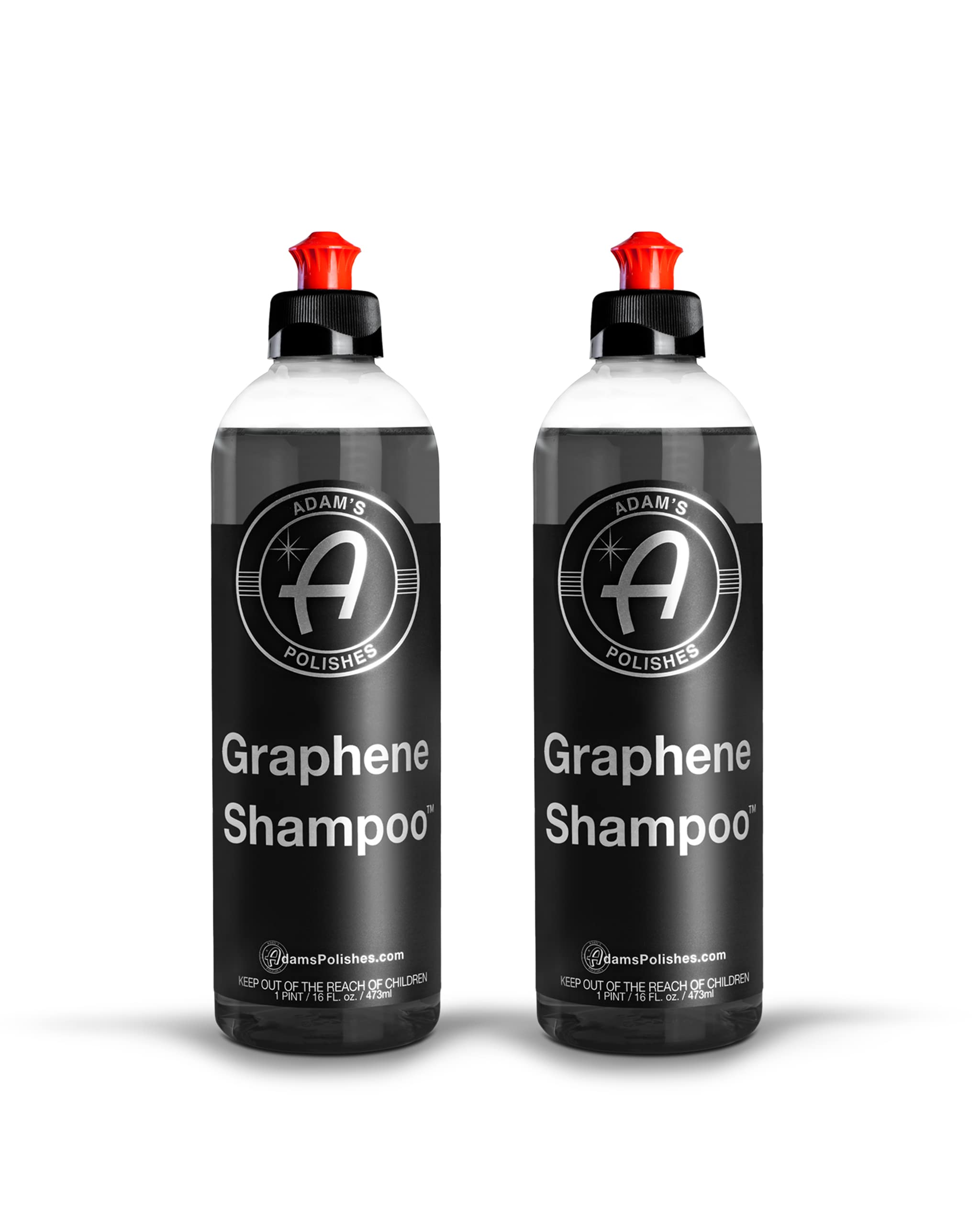
On paper, a shampoo that claims to both clean and deposit a ceramic-like layer sounds like a two-in-one that might compromise on either task. After several weeks of using Adam’s Polishes Graphene Shampoo in a two-bucket wash setup and with a foam cannon, I found it performs adequately as a maintenance wash for coated cars, but it has clear trade-offs that depend on your expectations.
The product comes as a two-pack of 16-ounce bottles, which is a reasonable quantity for multiple washes. It’s pH-neutral, which is important for preserving existing wax, sealant, or ceramic coatings. The graphene infusion is meant to add a thin protective layer as you wash, theoretically boosting slickness and gloss over time. In practice, this effect is subtle—you won’t see a dramatic transformation after one wash, but with regular use, the paint does feel smoother to the touch compared to using a plain car soap.
I tested it in a foam cannon first. Using about 2 ounces per gallon of water, it produced thick, clingy suds that stuck to vertical panels for a good 3–4 minutes before starting to drip. That dwell time is enough for the soap to loosen dirt and for the graphene to bond, though I wouldn’t rely on it for heavy contamination. For a weekly wash on a moderately dirty car, it worked fine. When used in a bucket, the suds were generous but not excessive—the product doesn’t create the massive foam mountains of some dedicated soaps, but it’s more than adequate for a two-bucket wash.
One notable limitation is the cleaning power. Because it’s pH neutral and designed to be gentle on coatings, it doesn’t cut through heavy grime or road film as aggressively as a stronger alkaline soap. If your car has caked-on mud or bug splatter, you’ll likely need a pre-wash or a stronger cleaner. I found that after a week of highway driving with light dust and pollen, the shampoo lifted dirt easily. But after a rainstorm left water spots and residue, I had to use a bit more agitation with a mitt. This is a trade-off common to most pH-neutral soaps—they protect your protection but require more elbow grease for tough dirt.
Comparing it to other ceramic-infused soaps, Adam’s version is on par with products like Chemical Guys HydroSuds or Gyeon Bathe. The graphene angle is more marketing than a game-changer—it doesn’t make the car noticeably more hydrophobic than a standard ceramic soap. Where it differs is in its low-foam profile in hard water. I have moderately hard tap water, and the suds held up better than some other soaps I’ve used, which can foam poorly or leave white residue. The rinse-off was clean, with no streaking or spotting if I dried promptly.
Who is this for? It’s best suited for owners of coated or ceramic-sealed vehicles who want a gentle, maintenance-friendly wash that adds a little protection with each session. It’s also good for people who prefer a soap that won’t strip their existing layer. It is not ideal for those who need a heavy-duty cleaner for neglected paint, or for someone who wants a dramatic gloss boost from a single wash. If you’re on a tight budget, a standard car soap plus a separate spray sealant might give more flexibility for the same cost.
In real-world use, the graphene shampoo feels like a competent daily driver rather than a standout. It does what it says—cleans gently and leaves a slightly slicker surface—but don’t expect it to replace a dedicated ceramic coating or a high-foam wash. The two-pack is convenient, but you might be better off buying a single bottle if you’re just testing it. Overall, it’s a solid choice for routine maintenance washes on coated cars, provided you manage your expectations about the graphene’s actual impact.